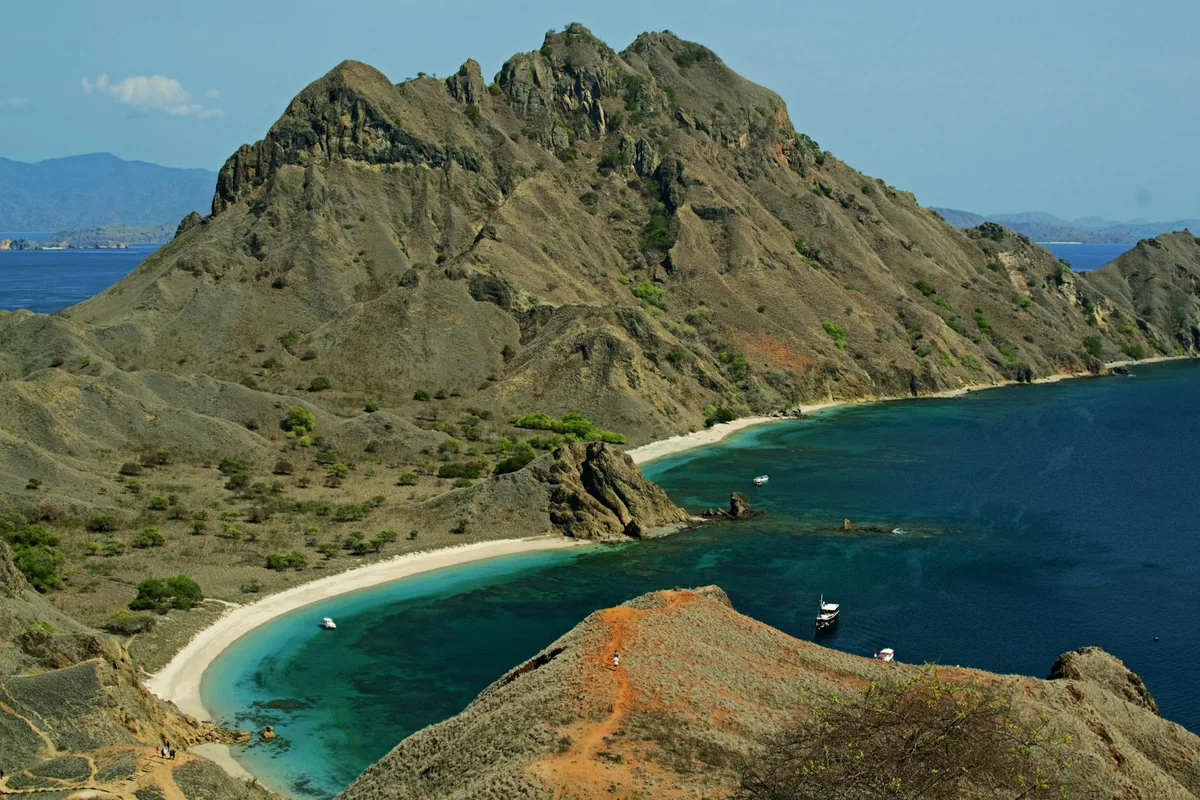
Komodo Island: Dragons, Pink Beach and World-Class Diving
Komodo Island is the largest island in Komodo National Park and home to the world's largest living lizard—the Komodo dragon—in populations numbering around 1,700. It also hosts Pink Beach, one of only a handful of pink-sand beaches in the world, and Manta Point, one of Indonesia's top manta ray dive sites. Access is by fast boat from Labuan Bajo, approximately 2–3 hours each way.
Komodo Island is the reason most people fly to Flores. It’s the island of the dragons, home to the world’s largest living lizard, a 3-metre, 70-kilogram predator that has somehow survived unchanged for millions of years in this pocket of eastern Indonesia.
It’s also, incidentally, surrounded by some of the richest marine habitat on the planet.
The Komodo Dragon
Varanus komodoensis is not folklore. The largest individuals reach 3 metres in length and 70 kilograms. They are ambush predators, they don’t chase prey over distance but wait, bite, and track. Their mouths carry venom glands (a revised understanding from the 2009 research) that cause anticoagulation. Large Komodo dragons can bring down a deer, a pig, or, historically, a human.
At Loh Liang ranger station, the standard trekking loops pass through habitats where dragons spend their mornings, around the watering hole, near the coast, in the tree shade at midday. The larger loops (3 km) give better chances of seeing multiple adults. Rangers keep groups together and at a safe distance.
What you’ll likely see: 3–8 dragons depending on loop length and time of day. Early morning is best, dragons are more active before the midday heat. By noon they shelter in shade and are less visible.
Pink Beach
Pink Beach (Pantai Merah) is located on the northeast coast of Komodo Island and is included in virtually every day tour. The famous pink sand is caused by red coral fragments (Foraminifera shells) mixed into the white base sand, the effect is subtle in strong midday light and most striking in low morning or late afternoon sun.
Snorkeling directly from the beach is excellent. The reef starts close to shore and features dense hard corals, triggerfish, parrotfish, and reef sharks in the shallows. Bring your own mask and snorkel or rent from your boat operator.
Manta Point
Between Komodo and the small island of Kalong, Manta Point (also called Manta Alley) is one of the most reliable manta ray sites in the world. Reef mantas (wingspan up to 4 metres) gather in large numbers from April through October to feed in the current-rich channel.
Manta Point is a snorkeling and diving site, non-swimmers can observe from the boat surface but won’t see much. Divers should note the current is strong and experience is required. The site is included in some day tours and most liveaboard itineraries.
How Do You Get There?
All boat departures are from the Bajo Marina in Labuan Bajo. Most visitors book a day tour combining Komodo Island (dragons + trek), Pink Beach (swimming/snorkeling), and a snorkel spot (Manta Point or Tatawa Island). Departure around 7-8 AM, return by 5-6 PM.
Day tour prices (2024-2025):
- Shared tour: IDR 450,000-700,000/person (includes park entrance, basic lunch, guide)
- Private boat: IDR 2,500,000-4,000,000/day for the whole boat (group of 4-8)
- Park entrance fee (IDR 650,000) usually included but confirm with operator
What to Expect on a Full Day at Komodo Island
A well-run Komodo Island day tour follows a rhythm. Here is what a good one looks like:
7:00 AM Depart Labuan Bajo. The 2-hour crossing can be rough in the wet season, calm and pleasant in the dry season. Bring a rain jacket and sit in the forward section if you want fresh air.
9:00 AM Arrive at Loh Liang ranger station. Park entrance fee paid here if not pre-paid by your operator. Ranger assigns to your group (groups capped at 8 people per ranger).
9:15-11:30 AM Dragon trek. Short loop (1 km, ~45 minutes) covers the main dragon habitat near the station. Medium loop (2 km, ~1 hour 15 minutes) adds savannah and coastal ridge. Long loop (4 km, ~2 hours) reaches the watering hole and has the best wildlife variety.
12:00-1:00 PM Lunch on the boat (included in most tours) anchored near Pink Beach or a snorkel site.
1:00-3:00 PM Pink Beach and snorkeling. Arrival earlier in the afternoon means fewer boats; later arrivals face peak crowds.
3:30-5:30 PM Return crossing to Labuan Bajo.
When Is Komodo Island Most Crowded?
July and August bring the most visitors. On peak days in July, Loh Liang can have 50-80+ tourists moving through on various loop groups. The short loop becomes noticeably crowded.
The medium and long loops are significantly less congested even in peak season, because most visitors take the short loop. If crowds matter to you, book the medium or long loop explicitly when arranging your tour.
Shoulder season (May-June and October) gives the best combination of good weather and manageable visitor numbers. May in particular is excellent: dry season starting, less crowded, manta rays active.
Is There Anything Else to Do Near Komodo Island?
Beyond the main dragon trek and Pink Beach:
Frigate Bay and Secret Beach: Smaller, less visited beaches accessible on the south side of Komodo Island by boat. Some private charters include these as extra stops.
Horseshoe Bay snorkeling: The bay between Komodo and Padar has excellent coral coverage. Ask your operator to include a stop here if time allows.
Kalong Island at sunset: A small islet near Komodo Island known for its giant flying fox colony. At dusk, thousands of flying foxes depart the trees in a stream visible from the boat. Some liveaboards make this a sunset stop.
Liveaboard Lombok-Komodo guide → Diving Komodo guide → Komodo dragon trekking →
Frequently asked questions
How do I get to Komodo Island from Labuan Bajo?
All visits are by boat from Labuan Bajo, there is no airport on Komodo Island. The boat journey takes approximately 2 hours one way. Shared day tours depart from Bajo Marina in the morning (IDR 450,000–700,000 per person including park entrance and basic lunch). Private boat hire starts at IDR 2,500,000 for a small group. Liveaboard cruises also stop at Komodo Island.
What is the Komodo National Park entrance fee?
As of 2025, the entrance fee is approximately IDR 650,000 per person per visit for Komodo Island and Padar Island, and IDR 900,000 for Rinca Island. The fee covers ranger escort and trekking. It is separate from boat hire costs. Always confirm the current rate with your operator, as fees have changed multiple times in recent years.
Can I see Komodo dragons on Komodo Island?
Yes, Komodo Island is home to approximately 2,500 Komodo dragons and sightings are virtually guaranteed. All visitors are accompanied by licensed park rangers from the BTNK (Balai Taman Nasional Komodo) on designated trail routes. Short trekking loops (1–3 km) pass through dragon habitats near Loh Liang ranger station. Rangers carry forked sticks for safety, Komodo dragons are dangerous and move faster than you expect.
What is Pink Beach on Komodo Island?
Pink Beach (Pantai Merah) is one of only seven pink-sand beaches in the world. The color comes from red coral fragments (from Foraminifera, a type of microscopic sea organism) that mix with white sand, producing a distinctive pink hue. The beach also has excellent snorkeling directly offshore, a vibrant reef within 30 metres of the waterline. Most day tours include a stop here.
Is Komodo Island safe?
Yes, with precautions. Komodo dragons are genuinely dangerous, they bite, have bacteria-laden saliva, and can sprint at 20 km/h over short distances. Staying with your ranger guide and following instructions is not optional. The seas around Komodo have strong currents, particularly between islands, swimming without a guide's permission is inadvisable. Jellyfish (including box jellyfish seasonally) are present.
What is the best time to visit Komodo Island?
May to October (dry season) is best for weather, calm seas, good visibility for snorkeling and diving, and reliable boat schedules. July–September sees the highest visitor numbers. Manta rays are most reliably seen at Manta Point from April to October. During the wet season (November–April), seas can be rough, making the 2-hour boat crossing uncomfortable, and some operators cancel trips on bad weather days.
Can I stay overnight on Komodo Island?
No tourist accommodation exists on Komodo Island itself. All visits are day trips from Labuan Bajo, or via liveaboard boat. The park rangers and a small number of BTNK staff live on the island, but there are no guesthouses, hostels, or hotels for visitors.