Diving & Snorkeling in Komodo National Park: Sites and Planning Guide
Komodo National Park is one of the world's top drift diving destinations, with over 50 sites ranging from shallow coral gardens to deep seamounts swept by strong Indian Ocean upwellings. Top sites include Batu Bolong, Crystal Rock, and Castle Rock for reef fish and pelagics, plus Manta Alley for year-round manta ray encounters. Strong currents make most sites better suited to intermediate and advanced divers.
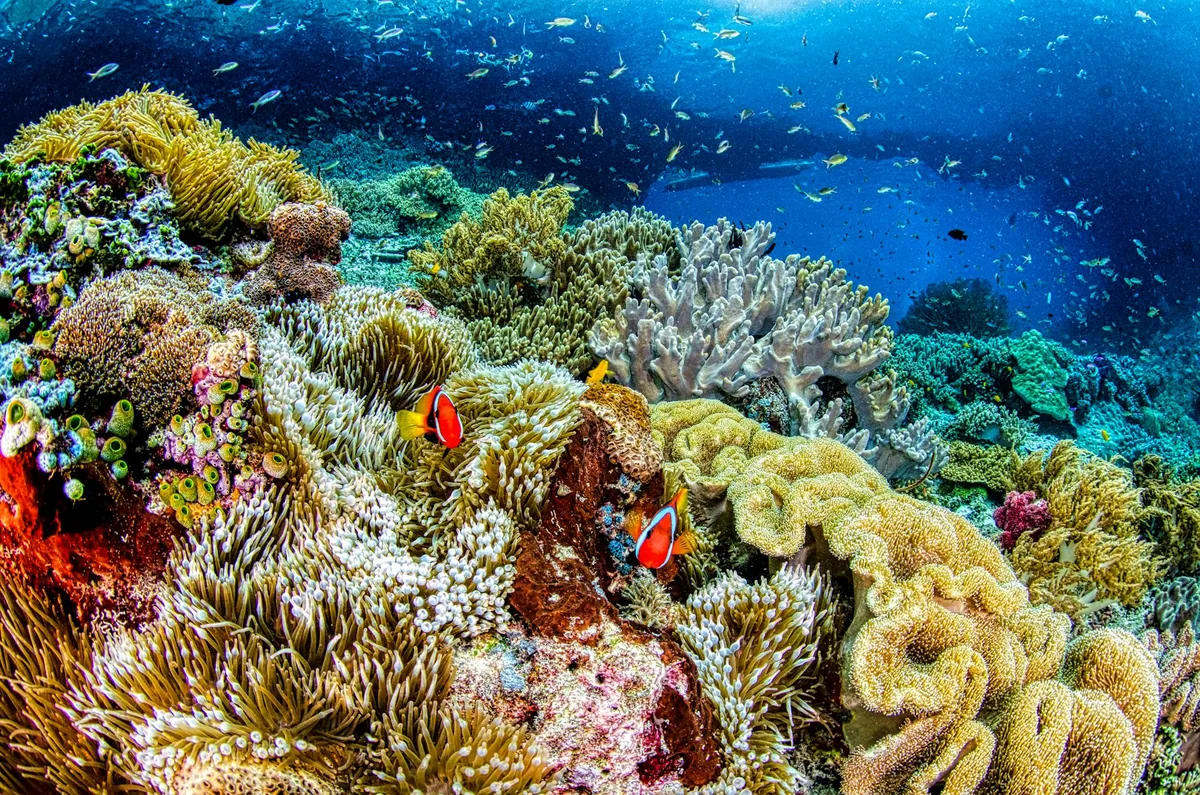
Komodo sits at the collision point of two ocean systems. Cold, nutrient-rich water from the Indian Ocean upwells through the deep straits between islands, meeting warmer current from the Java Sea. The result, an explosion of marine life that has made this one of the most celebrated dive destinations on earth, is directly visible from the surface. You’ll see it before you even put on a mask.
The diversity here is not subtle. A single dive at Batu Bolong can produce grey reef sharks, Napoleon wrasse, pygmy seahorses, orangutan crabs, nudibranchs, schooling fusiliers, and soft coral walls, all simultaneously. Manta rays gather in groups of forty. The currents that make some sites technical are the same currents that concentrate all this life.
Snorkeling is not a consolation prize here. Coral Garden and Manta Point deliver legitimate encounters with manta rays, reef sharks, and turtles to anyone in the water, no certification required.
Dive Sites
Advanced Sites (strong currents, drift diving)
Batu Bolong The definitive Komodo dive. A seamount between Komodo Island and Tatawa Kecil, rising from 40+ m to 3 m below surface. Dive the current-swept walls and you’re surrounded on all sides simultaneously: grey reef sharks mid-water, Napoleon wrasse, schooling fusiliers that can black out the water, soft coral walls, sea fans the size of rooms. On any given dive: huge Napoleon wrasse, tiny orangutan crabs, well-camouflaged pygmy seahorses, ostentatious nudibranchs. Visibility typically 20–30 m. Current is strong and tidal, discussed with your guide before entry, not after. Consistently cited as one of the world’s top ten dive sites. Max depth 35 m.
Castle Rock A submerged pinnacle in the northern park. The fish aggregations here, giant trevally in swirling tornado formations, dogtooth tuna, barracuda, grey reef sharks, are some of the densest in Southeast Asia. Hammerheads are occasionally sighted in the blue water. Technical entry, strong current, requires Advanced certification at most operators. Liveaboard access recommended; day boats can reach it on calm days but the long transit cuts bottom time. Max depth 40 m.
Crystal Rock Northern Komodo, near Castle Rock. Named for visibility that consistently hits 30–40 m, the clearest water in the park. A partially exposed seamount surrounded by large sea fans, pristine soft corals, tuna, whitetip and blacktip reef sharks, occasional dolphins. Strong current but the extraordinary visibility makes it worth every knot. Max depth 40 m.
Golden Passage The channel between Gili Lawa Darat and Gili Lawa Laut, a funnel that concentrates current and pushes enormous amounts of marine life through. Mantas, sharks, large pelagics. Timing is everything: dive it at slack or early flood, not full ebb. Liveaboard access typically.
Intermediate Sites
Manta Point (Makasser Reef) The most famous site in the park for manta encounters. Reef mantas (wingspan to 4 m) use specific coral heads on the east side of Komodo Island as cleaning stations, smaller fish remove parasites, and the mantas queue patiently. Approach at safe distance, fin slowly, stay still. During peak season (May–July), groups of 20–40 mantas are not unusual. Depth 8–30 m; the cleaning station action happens in the shallower zones. Also excellent for snorkeling, the cleaning station sits in 5–10 m of water and snorkelers regularly encounter mantas directly above. Note: the reef has sustained some historical damage from illegal fishing, but the manta experience remains extraordinary.
Manta Alley Southern Komodo, separate from Manta Point. Another reliable aggregation site, particularly for oceanic mantas (larger and rarer than reef mantas). Best July–September. Strong current possible.
Tatawa Besar A gentler alternative to Batu Bolong on days when current is running hard. Sloping hard coral walls, hawksbill turtles reliably present, whitetip reef sharks resting on the sand at depth, Napoleon wrasse, good hard coral coverage. Suitable for Open Water divers. Max depth 30 m.
Sebayur (Sebayur Kecil / Besar) The closest good dive site to Labuan Bajo, 30 minutes by boat. Reef fish in abundance, octopus, nudibranchs, reef sharks, turtles. Mild to moderate current. Popular first dive on day trips and for Open Water certification dives. Also good for snorkeling.
Wainilu Near Rinca Island. Komodo’s best macro and muck site, completely different character from the big pelagic dives. Sandy bottom with scattered coral bommies: frogfish, ghost pipefish, blue-ringed octopus, seahorses, nudibranchs, and critters that dive guides spot before you’ve even noticed the substrate. Depth 5–20 m, mild current. For divers who’ve already done Batu Bolong and want contrast.
Beginner & Snorkeling Sites
Coral Garden The best pure snorkeling site in the park. Calm water, shallow (5–15 m), dense hard coral, and clouds of reef fish that start just below the surface. No meaningful current. Sea turtles present. This is where Labuan Bajo dive shops run intro and certification dives, the conditions are genuinely forgiving.
Pink Beach (Pantai Merah) One of the world’s few pink sand beaches (iron-rich red coral fragments mixed with white sand). The reef starts metres from shore and the snorkeling is immediate: blue-spotted rays resting on sand, reef fish at every depth, turtles feeding on seagrass, occasional reef sharks visible from the shallows. Also a dive site from 5–20 m. Most day boats stop here for both swimming and snorkeling. The beach itself is worth the stop regardless.
Padar Island Two calm bays on either side of Padar’s dramatic ridgeline (see the viewpoint hike). Both bays offer gentle snorkeling with reef fish, invertebrates, occasional turtle. Depth 3–10 m, usually very calm. Most day trips include both the hike and a snorkel stop.
Rinca Mild current, sea turtles, reef fish, garden eels, small sharks, rays, depth 5–18 m. Usually combined with a Komodo dragon trek on Rinca Island. Good snorkeling after the walk. The marine life here is consistently underrated.
Gili Laba Remote northern island, liveaboard access primarily. Calm-water snorkeling with reef fish, occasional mantas. Pristine, few visitors.
Day Trips vs Liveaboards
→ Full comparison: Day Trip vs Liveaboard: Which Should You Choose?
Quick answer for divers:
- 1 day only? Day trips reach Manta Point, Pink Beach, Coral Garden, and Sebayur, 6–8 sites, depending on operator.
- 3–5 days? A liveaboard gives you Castle Rock, Crystal Rock, and Batu Bolong at optimal tidal windows, plus night dives and waking up at the site.
Best Season
April–October is the dry season and the primary diving window. Seas are calmer, visibility peaks at 20–40 m, and manta ray encounters are most reliable. Peak season is July–September, best conditions but most crowds.
May–July is the sweet spot: dry season in full swing, manta aggregations at maximum, fewer tourists than August.
November–March brings rougher seas, reduced visibility (10–15 m), and more limited site access. Oceanic mantas and whale sharks are possible in these months for dedicated enthusiasts, but conditions are less reliable overall.
Water temperature throughout the year: 24–29°C at surface. Thermoclines can drop this significantly at depth, bring a 3–5 mm wetsuit regardless of season.
Operators in Labuan Bajo
| Operator | Type | Notes |
|---|---|---|
| Dragon Dive Komodo | PADI 5-star resort + liveaboard | Shenron boat, IDC courses, max 8 divers |
| Scuba Republic | Liveaboard (Bajak) | Good reputation, mid-range |
| Wicked Diving | Liveaboard only | Multi-day, all levels |
| Wunderpus / Mimic | Budget liveaboard | Best value for price |
| Mermaid Liveaboards | Premium liveaboard | Larger boat, longer routes |
| Scuba Junkie Liveaboards | Shared cabin liveaboard | Social atmosphere, KLM Eliya |
| Blue Marlin Dive | Day diving resort | Intro dives, courses, day trips |
| Konjo Cruising Indonesia | Luxury liveaboard | Premium small-group, multi-night |
| Eunoia Freediving | Freediving specialists | Unique non-scuba market |
| Dive Komodo | Day trips + liveaboard | Range of options for all levels |
What Do You Need to Know Before Visiting?
Getting there: Komodo National Park sites are accessed by boat from Labuan Bajo. There are no roads. Getting to Labuan Bajo →
Park entry: IDR 200,000–300,000 per day (included by most operators).
Flying after diving: Do not fly within 24 hours of your last dive. This matters for anyone diving and then catching a flight from Labuan Bajo (LBJ airport). Plan your last dive day accordingly.
Equipment: All operators provide tanks, BCs, regulators, and wetsuits. Serious divers and underwater photographers should bring their own masks, fins, and computer.
Freediving: Eunoia Freediving in Labuan Bajo offers guided freediving in the park, a genuinely different way to experience Komodo that’s growing in popularity.
Frequently asked questions
Can I snorkel in Komodo if I don't dive?
Absolutely, and you'll see a remarkable amount. Non-divers snorkel directly over manta ray cleaning stations at Manta Point, swim above reef sharks at Pink Beach, and drift through Coral Garden's dense reef fish. Most day boats from Labuan Bajo include snorkel gear and stop at snorkeling-friendly sites. You don't need any experience or certification.
What is the best dive site in Komodo National Park?
Batu Bolong is the most consistently rated world-class site, a seamount surrounded by sharks, Napoleon wrasse, schools of thousands of fusiliers, and soft coral walls swept by strong current. Manta Point is the best for manta ray encounters. Castle Rock has the biggest fish aggregations. Each site has specific conditions, discuss with your operator on the day.
When is manta ray season in Komodo?
Reef manta rays are present from approximately April through October, peaking in May–July. During peak season, encounters with 10–40+ mantas at a single cleaning station are common. Mantas also gather at Manta Alley on the southern side of the park. Oceanic manta rays (larger, less common) occasionally appear in deeper water year-round.
Day trip or liveaboard, which should I choose?
See the full comparison at [Day Trip vs Liveaboard Komodo](/blog/day-trip-vs-liveaboard-komodo). Quick answer for divers: a day trip covers 6–8 main sites including Manta Point, Pink Beach, and Coral Garden. A liveaboard unlocks the remote northern sites (Castle Rock, Crystal Rock, Gili Laba) with 3–5 dives per day at optimal tidal windows.
How strong are the currents in Komodo?
Variable and site-dependent. Komodo's currents are tidal, a site that was gentle at 8 AM can become a ripping drift by 10 AM. Beginner-friendly sites like Coral Garden and Pink Beach have mild currents. Advanced sites like Batu Bolong, Castle Rock, and Crystal Rock have strong, sometimes unpredictable current. Local operators check tidal tables daily and adjust sites. Always dive with an experienced local guide.
Do I need Advanced certification to dive Komodo?
Open Water meets the minimum requirement. However, Advanced Open Water is strongly recommended, most of Komodo's signature sites are drift dives with strong current. Many operators require Advanced certification for Castle Rock and parts of Batu Bolong. If you're a newly certified Open Water diver, discuss site selection honestly with your dive master.
How cold is the water?
Surface temperature is 27–29°C. But Komodo sits in a mixing zone between warm Java Sea water and cold Indian Ocean upwellings. Thermoclines can drop temperatures sharply, at depth, 22–24°C is common, and in transition seasons (April–May, October–November), cold upwellings can hit 17–20°C with no warning. Bring a 3–5 mm full wetsuit. Many experienced Komodo divers use a 5 mm with a hood.
What marine life will I see?
Manta rays, reef sharks (grey, whitetip, blacktip), Napoleon wrasse, hawksbill turtles, blue-ringed octopus, pygmy seahorses, frogfish, giant trevally, dogtooth tuna, barracuda, huge schools of fusiliers and batfish, spinner dolphins, nudibranchs in exceptional variety. Occasional whale sharks (December–March). The Coral Triangle biodiversity here is among the richest on earth.
Which sites are best for snorkeling?
Coral Garden (calm, dense reef, fish immediately visible), Pink Beach (reef starts from shore, turtles and rays), Manta Point (snorkel with manta rays at the cleaning station), Padar bays (calm, scenic), and Rinca (combine with the Komodo dragon trek). All are accessible on day trips from Labuan Bajo.
How much does diving cost in Komodo?
Day boat diving (2 tanks, guide, equipment): approximately IDR 600,000–1,200,000 (~$37–75). Full-day snorkeling trips: approximately $50–120 per person including boat, guide, gear, lunch, and park entry. Liveaboards range from budget (~$150/night) to premium ($600+/night). Park entry fees are separate: approximately IDR 200,000–300,000 per day.