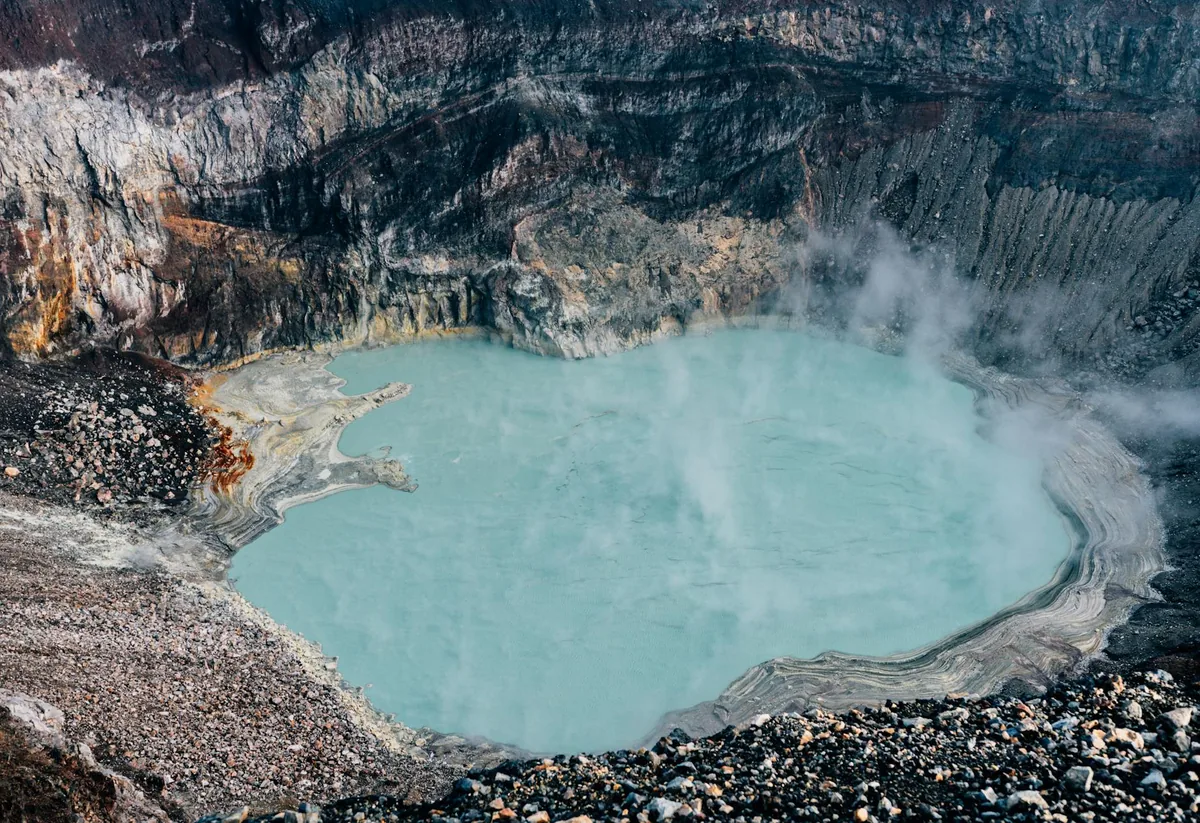
Kelimutu Crater Lakes
Kelimutu volcano in central Flores has three crater lakes famous for independently changing color—from vivid turquoise to brown, green, or black—due to shifts in volcanic mineral chemistry. The standard visit leaves Moni village at 4am for the 13km drive to the car park, with a 20-minute walk to the viewing platform timed for sunrise. The lakes' colors cannot be predicted in advance; checking recent traveler photos before visiting sets expectations accurately.
Three crater lakes. Three different colors. Colors that change on their own schedule, answering to volcanic chemistry rather than any tourist calendar. There is nothing else like Kelimutu anywhere on earth.
The local belief, held by the Lio people for centuries before geology explained the chemistry, is that Kelimutu’s lakes are the resting places of the dead. Tiwu Ata Mbupu (Lake of Old People) for the elders. Tiwu Nuwa Muri Koo Fai (Lake of Young Men and Maidens) for the young. Tiwu Ata Polo (Bewitched Lake) for the evil. Whether the volcano knows it or not, it puts on a performance worthy of the mythology.
What Are the Three Kelimutu Crater Lakes?
Tiwu Ata Mbupu, The westernmost and most separate of the three craters, visible from the main viewpoint but at a distance. Typically the least dramatic in color, often a muted grey-green.
Tiwu Nuwa Muri Koo Fai, The twin adjacent crater with Tiwu Ata Polo, both visible from the main summit viewpoint. Has historically displayed turquoise, bright green, and blue shades. The two adjacent lakes being different colors simultaneously is the signature visual of Kelimutu.
Tiwu Ata Polo, The ‘Enchanted Lake’, reached by continuing 15 minutes along the crater rim. Has been black, chocolate brown, dark red, and dark green at various times. Often the most intensely colored.
The current state can be seen on Google Maps photo reviews, check them the night before in Moni.
The Sunrise Protocol
The sequence that works:
Night before: Hire your ojek at your guesthouse. Confirm pick-up time based on sunrise. Ask about current weather and cloud conditions. Set two alarms.
4:30–5:00 AM: Ojek picks you up from your guesthouse. 30-minute ride on a winding mountain road. Bring a light jacket, the summit is 1,639 m and cold before dawn. Bring water.
5:00–5:30 AM: Arrive at the car park. The park gate opens at 4 AM. Pay the entrance fee (IDR 30,000, one of the cheapest park entries in Indonesia). Walk 10 minutes to the main viewpoint.
5:30–7:00 AM: Watch sunrise hit the lakes. The color shift as light intensity changes is part of the experience. Move to the second viewpoint (Tiwu Ata Polo) at some point during this window.
7:00–8:00 AM: Return to Moni for breakfast. Your guesthouse should be expecting you.
What Is the Local Mythology Around Kelimutu?
The Lio people of central Flores have venerated Kelimutu for centuries. The lakes are not just scenic, they are sacred. Offerings are still brought to the crater rim. Certain days are considered propitious for specific ceremonies. Local guides can explain the mythology in depth.
The national park designation (1992) has, if anything, reinforced the site’s importance, the combination of scientific protection and traditional reverence sits unusually comfortably here.
What Should You Bring?
- Light jacket or fleece (cold before sunrise at 1,639 m)
- Headlamp or phone torch (path is lit but dim in the dark)
- Water (500 ml minimum)
- Camera with a wide lens or phone with panorama mode
- Snacks (nothing available at the viewpoint)
- Cash for entrance fee (IDR 30,000, no card machines)
What If It’s Cloudy?
Clouds at Kelimutu are common, especially November-April and in the early morning when mist rises from the crater. If clouds obscure the lakes, you have two options:
Wait it out: In the dry season (May-October), morning clouds often clear by 7-8 AM as the sun warms the summit. If you arrived at 5:30, waiting an hour or two is worth it. Bring enough layers and snacks.
Return the next day: Moni guesthouses often include free return transport if conditions were bad, ask about this policy when you book. If your schedule allows, stay an extra night in Moni and try again.
Avoid wet season visits if you specifically came for the lake colors. Cloud cover in November-April can persist all morning.
How Do You Get from Ende to Moni?
Most travelers arrive at Kelimutu via Moni village, 13 km below the summit and the nearest accommodation base.
From Ende: Moni is 50 km east. By shared minivan from Ende’s bus terminal, the ride takes 1.5 hours (IDR 30,000-50,000). By hired car, about the same time. Minivan schedules are morning-only; confirm at the terminal the evening before.
From Labuan Bajo: There is no direct road connection. Either fly into Ende and transfer to Moni, or travel the Trans-Flores Highway overland: Labuan Bajo → Ruteng (3 hrs) → Bajawa (3.5 hrs) → Ende (3 hrs) → Moni (1.5 hrs). A full day’s drive, minimum.
By air: H. Hasan Aroeboesman Airport (ENE) in Ende receives daily flights from Bali. Fly into Ende, transfer to Moni the same afternoon, sleep, visit Kelimutu at sunrise. The most time-efficient option for a Kelimutu-focused trip.
What Is Moni Like?
Moni is a small valley village at about 560 m altitude, noticeably cooler than the Flores lowlands. It has a dozen or so guesthouses, a few warungs, a morning market (Mondays and Thursdays are market days with traders from surrounding villages), and not much else. That’s fine.
The village serves one purpose well: staging Kelimutu visits. Guesthouses are inexpensive (IDR 100,000-250,000/night), most include breakfast, and all owners know the sunrise logistics and can arrange your ojek.
What Do You Do After Kelimutu?
Most visitors are back in Moni by 8-9 AM. That leaves a full day:
Morning market (Tuesdays and Fridays): If timing aligns, the weekly market below Moni is worth an hour. Lio-style textiles, local produce, and the social event of the week for surrounding villages.
Moni waterfall: A 30-minute walk from the village centre leads to a small waterfall with a swimming pool. Ask at your guesthouse for directions.
Continue east to Maumere: The road from Moni to Maumere takes 3-4 hours. Many travelers do Kelimutu at sunrise and catch an afternoon bus to Maumere the same day to fly out.
Moni village guide → Ende travel guide → Flores 10-day itinerary →
Frequently asked questions
What are the Kelimutu crater lakes?
Kelimutu is a volcano in central Flores with three crater lakes at its summit. Each lake occupies a separate volcanic crater and maintains a distinctly different color from the others, ranging across turquoise, dark green, black, chocolate brown, and blood red over the years. The colors change due to varying levels of volcanic gas, mineral composition, and chemical reactions with the crater walls. No other place on earth has three crater lakes that each change color independently.
Why do the Kelimutu lakes change color?
The color of each lake is determined by its chemistry, specifically the interaction between volcanic gases rising from below (hydrogen sulfide, sulfur dioxide, carbon dioxide) and the minerals dissolved in the water. When gas emissions change, the pH and mineral concentrations shift, and the color changes. The changes are unpredictable, a lake that was turquoise for six months can shift to chocolate brown in weeks. The current colors can be checked on recent traveler photos posted to Google Maps.
What color are the Kelimutu lakes right now?
The colors change constantly and cannot be predicted in advance. As of early 2025: Tiwu Nuwa Muri Koo Fai were turquoise-green; Tiwu Ata Polo (the Enchanted Lake) was dark brown-red. But this may have changed by the time you read this. Check the most recent Google Maps photos or ask at your Moni guesthouse the evening before your visit.
What time should I visit Kelimutu?
Sunrise, without question. The lakes are most vivid when the low morning light hits the water at a flat angle before the sun climbs overhead. By 9 AM, the light flattens and colors wash out. More importantly, cloud and mist often gather by mid-morning and can obscure the lakes entirely. Depart Moni no later than 5 AM. The park gates open at 4 AM.
How do I get from Moni to Kelimutu?
Hire an ojek (motorcycle taxi) from your Moni guesthouse the night before, IDR 40,000–60,000 return, 30-minute ride. Some guesthouses operate small trucks for IDR 20,000 per person one way (depart ~4:30 AM, ask the evening before). The road is paved but winding. Renting a motorbike yourself (IDR 60,000–80,000/day from Moni) is possible but challenging in the dark.
Is the Kelimutu hike difficult?
No, from the car park to the main viewpoint is a paved path of about 10 minutes with some stairs. The main viewpoint overlooks Tiwu Nuwa Muri Koo Fai. A further 15-minute walk along the crater rim reaches the separate viewpoint for Tiwu Ata Polo (the third lake). There is no technical hiking. Total walking time: 30–45 minutes round trip. Not suitable for wheelchairs but accessible to most travelers.
Are there three or two viewpoints at Kelimutu?
Two main viewpoints: (1) The main summit viewpoint, which overlooks Tiwu Nuwa Muri Koo Fai (the two adjacent crater lakes that appear different colors) and Tiwu Ata Mbupu (the westernmost lake, farthest and often the least vivid). (2) A second viewpoint reached by continuing along the rim, which gives the best angle on Tiwu Ata Polo (the 'Enchanted Lake'). Allow time to visit both.