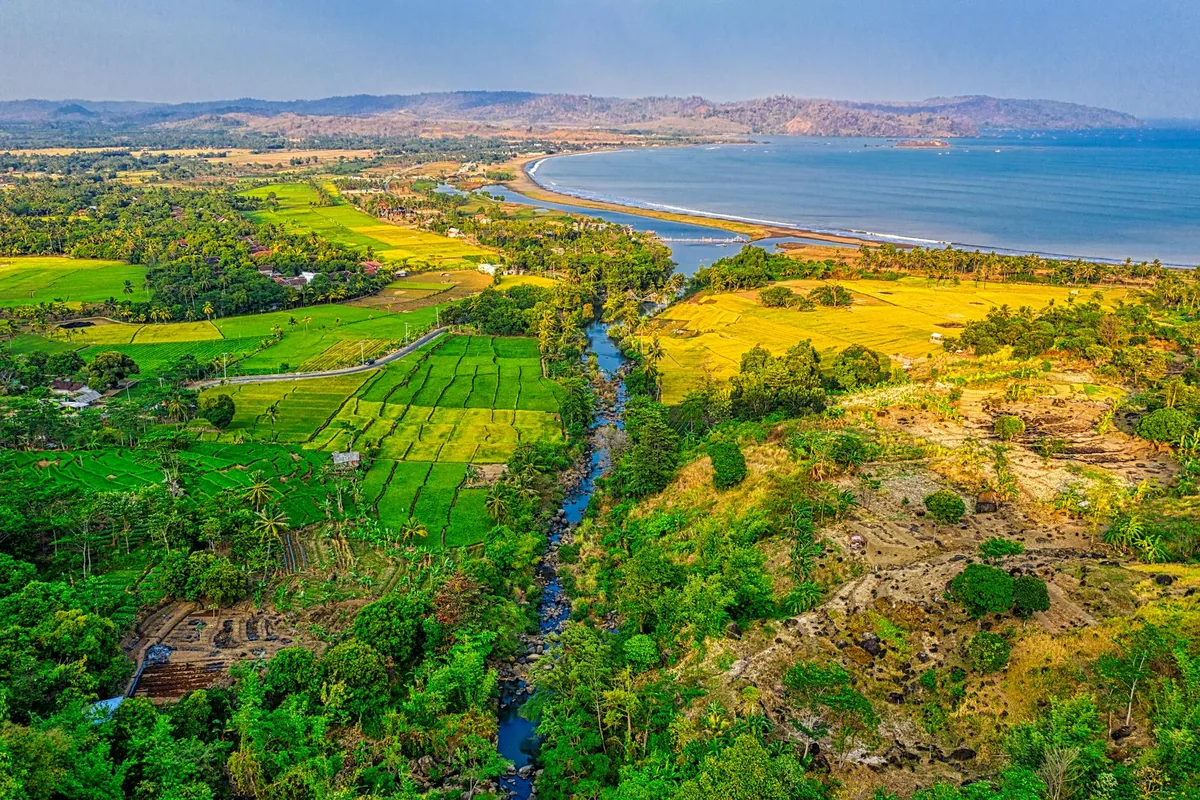
Maumere
Maumere is the largest town in eastern Flores and a key transport hub, with an airport (MOF) receiving flights from Bali and Kupang. The bay was once considered among the best diving in Indonesia before a 1992 earthquake damaged the reef; dive sites have partially recovered and see very few visitors today. It is also the gateway for exploring the Sikka cultural area and traditional ikat weaving villages in the surrounding highlands.
Maumere gets overlooked. Travelers arriving by bus from Moni are usually just passing through, heading east to Larantuka’s Easter processions, or west retracing their steps. That’s a mild shame, because Maumere has two things worth stopping for: Wuring’s stilted Bajo village and surprisingly good diving on reefs that nobody dives.
The 1992 Earthquake
It’s worth knowing what happened here. On 12 December 1992, a 7.5-magnitude earthquake struck just offshore, triggering a tsunami that hit Maumere’s coast within minutes. Over 2,500 people died and most of the city’s built environment was destroyed. The St. Joseph Cathedral, built by Dutch missionaries, collapsed entirely.
The rebuilt city you see today is only 30 years old. Some older residents still won’t build close to the shore. The new Cathedral of the Immaculate Conception, completed in the late 1990s, has a different character, more utilitarian, but charged with communal significance.
Wuring Bajo Village
Wuring is the main reason to linger. A cluster of wooden houses on stilts extends over the sea 8 km west of town, connected by a system of narrow wooden walkways. The Bajo people who live here are descended from maritime nomads, the Orang Bajo or “Sea People”, who traditionally lived their entire lives on boats or temporary sea platforms.
Today Wuring is a settled community of several hundred families. They still fish. The boats are handbuilt. Children grow up walking the walkways without guardrails. Arriving at dawn when the boats are setting out is the best timing.
Ojek from Maumere town: IDR 15,000–25,000. Walk the jetty out to the village and pay the small entry donation. A local guide (IDR 50,000–75,000) adds context.
Diving Around Maumere
Before 1992, Maumere Bay was one of Indonesia’s most celebrated dive regions. The earthquake and tsunami damaged reefs significantly, and the region never regained its pre-quake reputation. But the outer reefs, particularly around Babi Island (5 km offshore) and Pomana Besar, have recovered well.
What you’ll find: dense hard coral, solid reef fish populations including Napoleon wrasse, moray eels, and schooling fusiliers. Current conditions vary by site. Top visibility: 15–25 m in the dry season. Water temperature: 27–29°C year-round.
Operators: Sea World Club and Flores Sea Dive have boats and basic equipment. Expect to pay IDR 400,000–600,000 per dive including equipment. Liveaboards from Komodo sometimes call at Maumere sites.
Beaches Near Maumere
Nangahure Beach: 10 km east of town on the road to Larantuka, a quiet stretch of dark volcanic sand with views across the bay. Not a swimming beach by most standards, but good for a sunset walk and completely uncrowded.
Koka Beach: 40 km west of Maumere, increasingly well-known among Indonesian domestic tourists for its clear water and relatively intact reef. Day trip from Maumere by hired car (IDR 300,000-400,000 return). Getting more visited each year.
Sikka village beach: 25 km south of Maumere, a Portuguese colonial-era Catholic village with a historic church and a quiet fishing beach. The ikat textiles from Sikka are among the finest on Flores; the local weaving cooperative has pieces from IDR 200,000-1,500,000.
Where Do You Eat in Maumere?
The food scene is better than most Flores stops. What to look for:
Pasar Malam (night market): Near the waterfront, evenings from 6 PM. Grilled fish, corn, sate, and local dishes for IDR 20,000-40,000. The most reliable and cheapest option for dinner.
RM Bhakti: A local favourite near the city centre, open for lunch and dinner, Indonesian standards (nasi campur, ikan bakar, soto) for IDR 35,000-60,000 per person.
Café and coffee shops: Maumere has a small but noticeable café culture by Flores standards. Flores Arabica coffee from the Bajawa highlands is widely served. Several cafes on the main commercial strip.
What Are the Practical Things to Know?
ATMs: BNI, BRI, and Mandiri branches in the city centre. Maumere is your last reliable ATM point before Larantuka.
Mobile signal: Good coverage in town; Telkomsel is most reliable.
Medical: RSUD TC Hillers is the main public hospital, the best medical facility in East Flores.
Transport to Bali: Frans Seda Airport (MOF) has daily flights to Denpasar. Book early in July-August peak season; routes sell out faster than Labuan Bajo alternatives.
Kost and longer stays: Maumere is a university town (Universitas Nusa Nipa). If you’re staying more than a few days, kost-style accommodation (monthly rentals) in residential areas is available for IDR 800,000-1,500,000/month.
Where Do You Go After Maumere?
East to Larantuka (130 km, 2.5-3 hours), the final major stop on the Trans-Flores Highway and the departure point for ferries to the Solor and Alor archipelagos.
West to Moni (96 km, 2.5 hours) for Kelimutu.
Or fly home from MOF: daily flights to Bali, connections to Kupang, Makassar, and onwards.
Larantuka guide → Moni and Kelimutu → Flores overland guide →
Frequently asked questions
What is Maumere known for?
Maumere is East Flores' largest city and the transport hub for the eastern end of the Trans-Flores Highway. Before the 1992 earthquake devastated the region, it was one of Indonesia's premier dive destinations, the reefs around Babi Island and Pomana Besar were world-class. Recovery has been slow but dive operations have returned. It's also known for Wuring, a traditional Bajo (sea nomad) fishing village built on stilts over the sea.
Is Maumere a good diving destination?
Maumere's reefs are recovering and offer genuinely good diving, hard coral gardens, abundant reef fish, occasional pelagics, but it's nowhere near the calibre of Komodo's top sites. If diving is your primary goal, Labuan Bajo is a better base. Maumere's advantage is a complete lack of crowds, lower prices (IDR 350,000–500,000/dive), and historical interest. A few small dive operators remain active, mainly catering to liveaboards stopping through.
How do I get to Maumere?
By air: Frans Seda Airport (MOF) has daily flights from Bali (via Citilink/Wings Air) and connections to Kupang. This is often the most efficient entry point for East Flores. By road: 2.5 hours from Moni (westbound), 2.5–3 hours from Larantuka (eastbound). Bus terminal (Terminal Madawat) handles Trans-Flores services.
What is Wuring village?
Wuring is a Bajo (sea nomad) community 8 km west of Maumere, built entirely on wooden stilts over the water. The Bajo people were historically nomadic seafarers who spent their lives at sea, Wuring is one of the largest settled Bajo communities in East Nusa Tenggara. You can walk the wooden walkways between houses, watch boats being built, and see daily life. Entry by donation; local guides available.
Is Maumere safe to travel?
Maumere is safe. The 1992 earthquake (7.5 magnitude, followed by a tsunami) killed over 2,500 people and flattened much of the city. Today it's fully rebuilt and functions normally. Minor tremors still occur (this is an active seismic zone across all of Flores) but are not alarming.
What is there to do in Maumere for a day?
A full day in Maumere: morning visit to Wuring fishing village, afternoon at Nangahure beach (10 km east of town), evening at the city waterfront. The Cathedral of the Immaculate Conception (built on the site destroyed in 1992) is architecturally interesting. The Maumere market near the port runs every morning. For diving, book at least a day ahead with a local operator.
Where should I stay in Maumere?
Hotel Maumere Beach (on the seafront, IDR 300,000–500,000/night) and Angin Mamiri Hotel are reliable choices. Budget options near the airport road start at IDR 150,000. For dive-focused stays, Sea World Club (east of town, on the beach) caters specifically to divers and snorkelers.