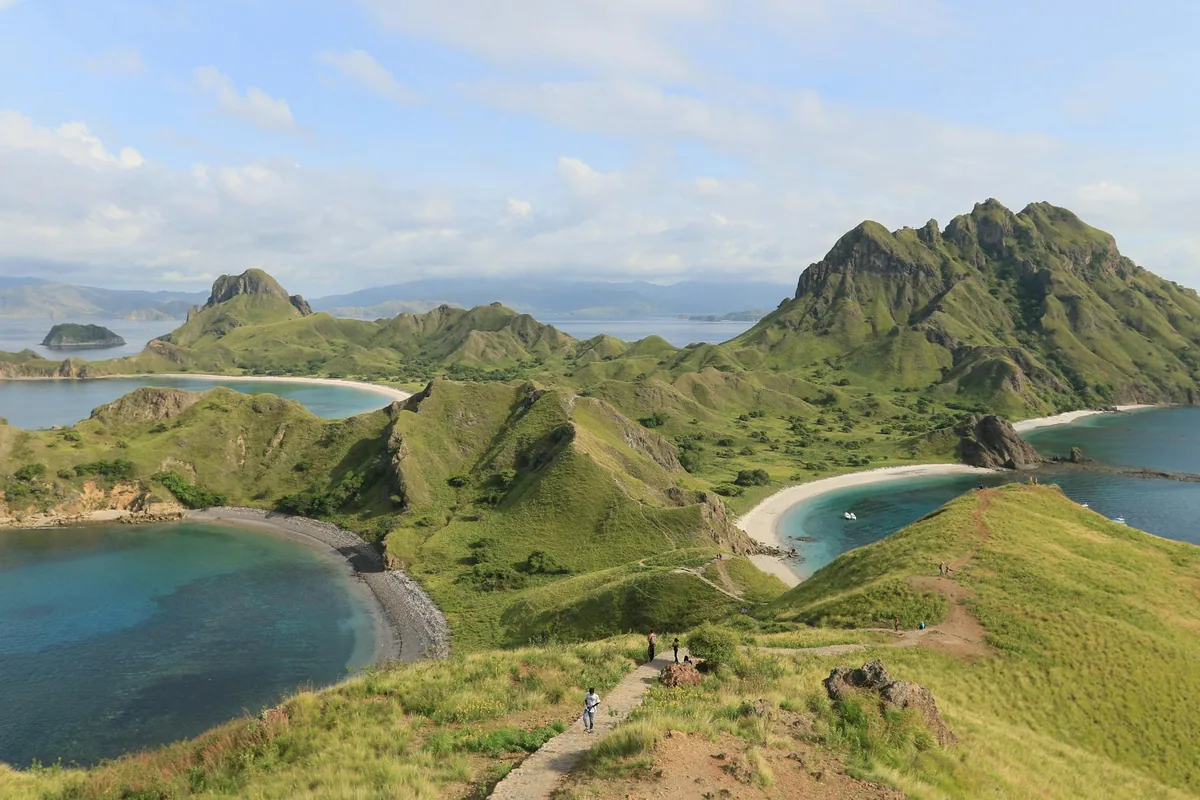
Padar Island
Padar Island is famous for its dramatic three-bay panorama, widely considered the most photographed viewpoint in Indonesia—three beaches of different sand colors separated by sharp volcanic ridgelines. The 30-minute steep hike from the jetty to the summit operates at sunrise and throughout the day. It is uninhabited and visited only as a boat stop, typically combined with Komodo or Rinca island.
There is a photograph that has become shorthand for Indonesian paradise. Three curved bays, each a different color of sand, white, black, pink, separated by ridgelines of volcanic rock, all visible in a single panorama from a hill above. That photograph is Padar Island.
The image has been reproduced tens of millions of times. Padar has become one of the most-Googled viewpoints in Southeast Asia. On a peak July morning, a dozen boats may be moored in its bay simultaneously.
None of this diminishes what you see when you reach the top. It really is that good.
What Is the Hike Like?
From the beach, the path climbs steeply through dry scrub and volcanic rock to the main ridgeline. The wooden steps number approximately 800, well maintained, properly stepped, with occasional rope handholds on the steepest sections.
The climb takes 20–25 minutes at a steady pace. Take water. The ridge is fully exposed to sun with no shade. On hot days (which is most days, May–October), the heat is significant.
At the top: a wooden viewing platform with an unobstructed view of all three bays. The three beaches visible are:
- Northwest bay, white sand, usually where the boat is anchored
- South bay, dark volcanic sand
- East bay, pinkish sand (similar composition to Pink Beach on Komodo Island)
The three bays in one shot requires a wide-angle lens or panorama mode. Most phones can capture it clearly.
How Do You Get the Best Shot at Padar?
Timing: Sunrise. Arrive at the top as the sun clears the eastern horizon. The low-angle light on the sand colors and the shadows in the valleys is the version you’ve seen in photographs.
Crowds: Padar’s ridge is narrow. Groups of 10–15 people can fill the main viewpoint platform. If you see multiple boats already docked, consider waiting 20 minutes for a group to descend before you go up.
Dry season tip: The vegetation is brown-gold in the dry season (May–October), which actually makes for better photographs, the contrast between land and sea is sharper. Wet season (November–April) makes the hills green but reduces visibility.
How Do You Get to Padar Island?
All access is by speedboat or wooden boat from Labuan Bajo. There is no other way in.
Standard day tours include Padar as one stop among several. The Bajo Marina departure is typically 7-8 AM for a full day (4-5 stops including Komodo or Rinca, Padar, and a snorkel site). Cost: IDR 450,000-700,000 per person on a shared boat.
Sunrise-specific charters depart Labuan Bajo at 3-4 AM to reach Padar for dawn. These are private or semi-private charters (IDR 2,500,000-4,000,000 for the boat, divided by the group). The experience is different: you hike in darkness with headlamps, reach the top as the sun rises, and have the ridge mostly to yourself. Worth it if you have a group to split costs.
Padar is inside Komodo National Park, so the park entrance fee applies: IDR 650,000 per person (2025 rates). This is the same ticket as Komodo Island or Padar-only visits.
What Is at the Beach Below Padar?
The northwest bay at Padar’s base has a white-sand beach and calm, clear water. It’s a good place to swim while you wait for others in your group to finish the hike, or as a cool-down after descending.
The beach has no facilities, no shade structure, and no food or water vendors. Bring everything you need from Labuan Bajo.
Snorkeling is possible directly off the beach (bring your own gear or borrow from your boat), the reef begins at about 3-5 metres. Not Komodo’s best snorkel site, but clear water with reef fish.
What Should You Bring to Padar?
The hike is short but exposed. Practical packing for Padar:
- 1.5 litres of water per person minimum. The climb takes 20-25 minutes but the heat on the ridge can be serious
- Sun protection. Hat, sunscreen. The ridge has zero shade
- Footwear with grip. The steps are cut stone and get slippery; flip-flops work but are slow and slip
- Camera with wide-angle lens or phone panorama mode. The three bays don’t fit in a standard lens at the top
- Cash. Park rangers collect entrance fees at the pier; they accept IDR only
- Small snorkel kit if you want to use the beach
Leave large bags on the boat. The hike is narrow and there is no bag storage.
What Can You Combine Padar With?
Padar is rarely visited alone; it’s almost always combined with either Rinca Island or Komodo Island in the same day.
- Rinca + Padar + snorkel: Rinca for dragons in the morning → Padar for viewpoint at midday → afternoon snorkeling
- Padar sunrise + Komodo Island: Depart Labuan Bajo at 4-5 AM for Padar sunrise → continue to Komodo Island for dragons and Pink Beach
- Padar + Pink Beach + Kanawa snorkel: A lighter day if you skip the dragon islands entirely
Most operators can arrange any combination. Ask specifically what time they plan to arrive at Padar and whether it will be before or after other groups.
Rinca Island guide → Komodo Island guide → Day trip vs liveaboard comparison →
Frequently asked questions
What makes Padar Island famous?
Padar's three-bay viewpoint, where you can see three distinct beaches of different sand colors (white, black, and pink) in the same panorama, is the most photographed landscape in Indonesia. The view from the ridge shows curved bays on three sides, framed by dramatic volcanic hills descending to the sea. It became internationally famous after Instagram spread the image globally around 2015.
How do I get to Padar Island?
All access is by boat from Labuan Bajo, approximately 1–1.5 hours. Padar is included in many Komodo National Park day tours, particularly the 'Rinca + Padar' combination. Some operators run Padar-specific sunrise tours that depart Labuan Bajo at 4–5 AM to reach the island before dawn. The standard approach is to include Padar as one stop in a multi-island day tour.
How hard is the hike to the Padar viewpoint?
The main viewpoint requires climbing approximately 800 steps carved into the ridge, about 20–30 minutes of moderate hiking. The path is well-maintained with wooden steps but is steep in sections. In strong heat, take water. The top has no shade. Most people of normal fitness complete it without difficulty. An alternative shorter viewpoint is accessible after about 100 steps if needed.
Is there a second viewpoint on Padar?
Yes, about halfway up the main trail, a secondary viewpoint overlooks one of the bays. This is significantly less impressive than the top but accessible to those who find the full climb difficult. The famous three-bay panorama is only visible from the top ridgeline.
Are there Komodo dragons on Padar Island?
No, Padar Island has no Komodo dragon population. Dragons historically lived here but were hunted to local extinction in the mid-20th century when deer populations (their primary prey) were over-hunted by local communities. There are ongoing conservation discussions about reintroducing dragons to Padar, but as of 2025 none are present. Visit Komodo or Rinca Island for dragons.
What is the best time of day to visit Padar?
Sunrise. The light on the three bays is most dramatic in the first hour after dawn, golden light hitting the varied sand colors, the hills casting long shadows. Most boats dock as the sun rises and visitors hike in full golden light. Midday visits work but the harsh overhead sun flattens the colors and the heat on the exposed ridge is significant. Sunset is a second-best option but requires an overnight liveaboard or dedicated sunset charter.
How long should I budget for Padar?
Allow 1.5–2 hours total: 30 minutes from boat to viewpoint (hike up), 20 minutes at the top, 20 minutes down, plus time on the beach at the base. If you're combining Padar with other islands in a day tour, operators typically schedule 1.5 hours at Padar. Arrive early to beat other groups, Padar is narrow at the top and simultaneous crowds make photography difficult.